Designing clarity across a growing digital ecosystem.
At Axpo, I worked across internal products, platforms and teams — designing new experiences, testing ideas with users, and helping make complex digital services easier to understand and use.
But the more I worked across the organisation, the more I realised that the challenge wasn't just designing individual screens.
It was designing for a growing, scalable and sustainable ecosystem.
Company: Axpo
Role: UX Designer
Date: Oct 2025 - Oct 2026
Agile Product Development · UX Design · Information Architecture · Design System · User testing · AI prototyping
The spark
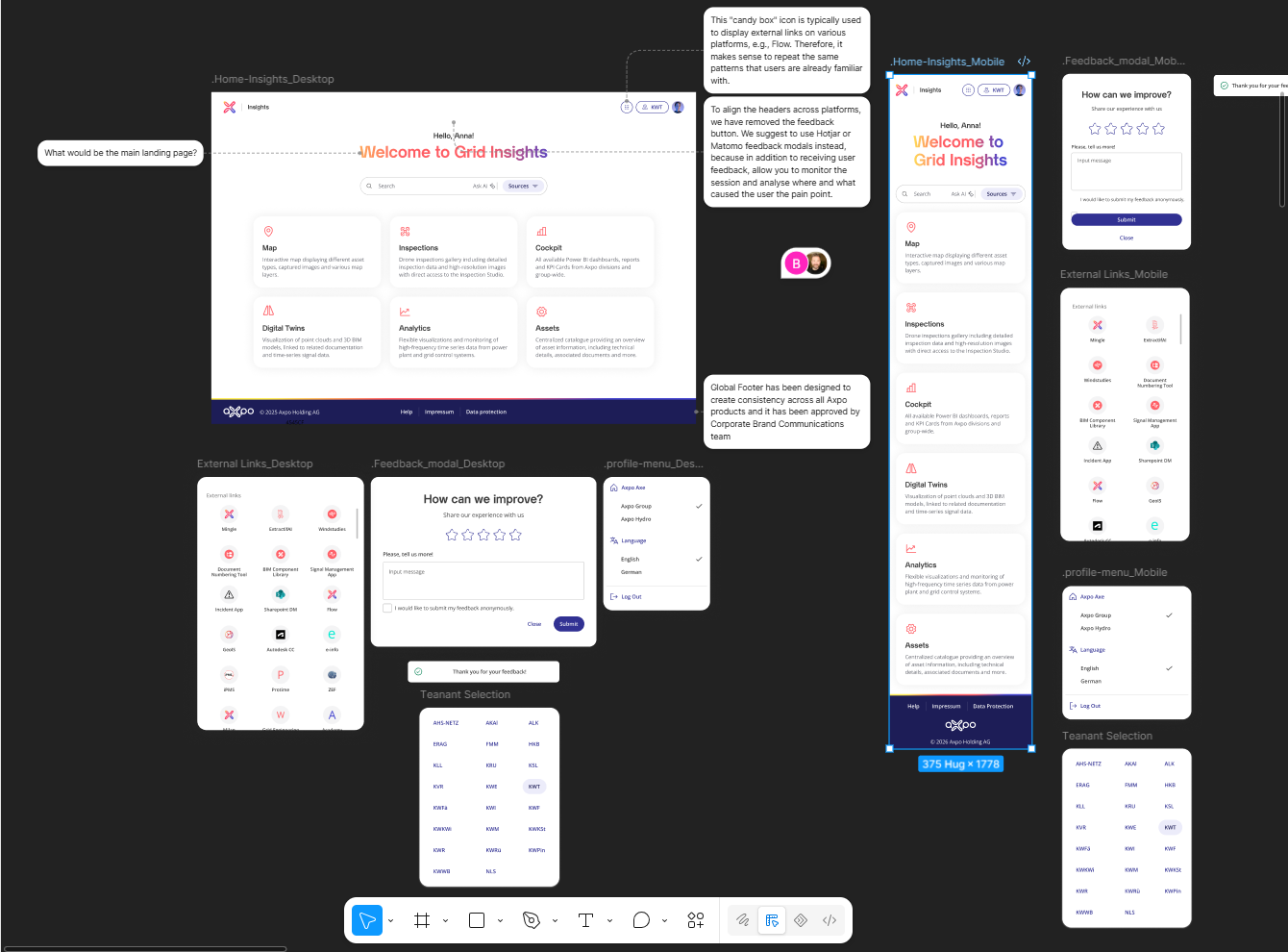
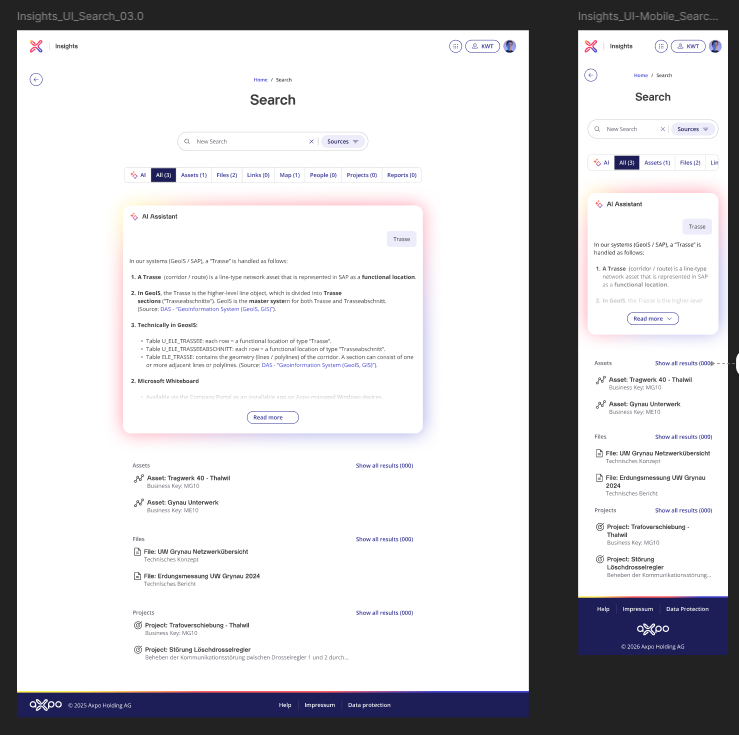
During my time at Axpo, I worked independently across 17 initiatives, covering product design, research, AI, information architecture, responsive UX, accessibility, design systems and analytics.
Working across different teams and departments also gave me a broader perspective. I started looking beyond individual products at the systems and processes that connect them.
And one question kept coming back:
How do you create good UX when the product, and the organisation behind it, keeps growing?
A feature can be well designed and still create friction if the navigation is confusing, the content is poorly structured, the AI is difficult to understand, or different products behave in completely different ways.
So alongside assigned product work, I started exploring some of the bigger questions around UX:
How do we measure UX?
How can design systems scale?
How should AI change the way designers work?
How can designers across Axpo learn from each other and reduce silos?
The challenge
The complexity wasn't coming from one place. It was a combination of:
Growing products
IT Hub → Axpo Hub → more departments and services.Different users
Different roles, locations, needs and levels of technical knowledge.More technology
AI, analytics, data-heavy interfaces and multiple devices.Different ways of working
Although teams work within an Agile framework, each team has its own pace, priorities and ways of collaborating.Existing systems
Design patterns, content structures and technical constraints that couldn't simply be replaced.A highly regulated environment
Axpo operates in a strategic energy sector where compliance, reliability and decisions can have an impact far beyond a single product or market.
The challenge was therefore:
How can we make increasingly complex products feel clear, predictable and connected?
My approach
Across very different projects, I kept coming back to the same user-centered framework:
Understand → Design → Test → Learn → Improve
Whether I was working on search, information architecture, AI, responsive behaviour or a new feature, the goal wasn't simply to deliver another design. It was to understand the problem, make a thoughtful intervention, and learn from what happened next.
01/ Understanding the ecosystem
When starting a new initiative, I first meet with the Product Owner to understand the problem, context, history and people involved.
I want to know why the request exists, not just what needs to be designed.
Depending on the project, this can also involve reviewing existing data, talking to stakeholders, looking at previous research, or investigating established patterns and industry practices.
This helps me avoid designing from assumptions and makes sure the work is solving a real problem — rather than simply moving a ticket into the "Done" column.
03/ Solve the difficult parts
I adapt my approach to the team's time, resources and technical reality.
Rather than imposing a solution, I focus on keeping communication open and finding the best outcome within the constraints we actually have. Some of the most interesting problems sat at the intersection of UX and technology.
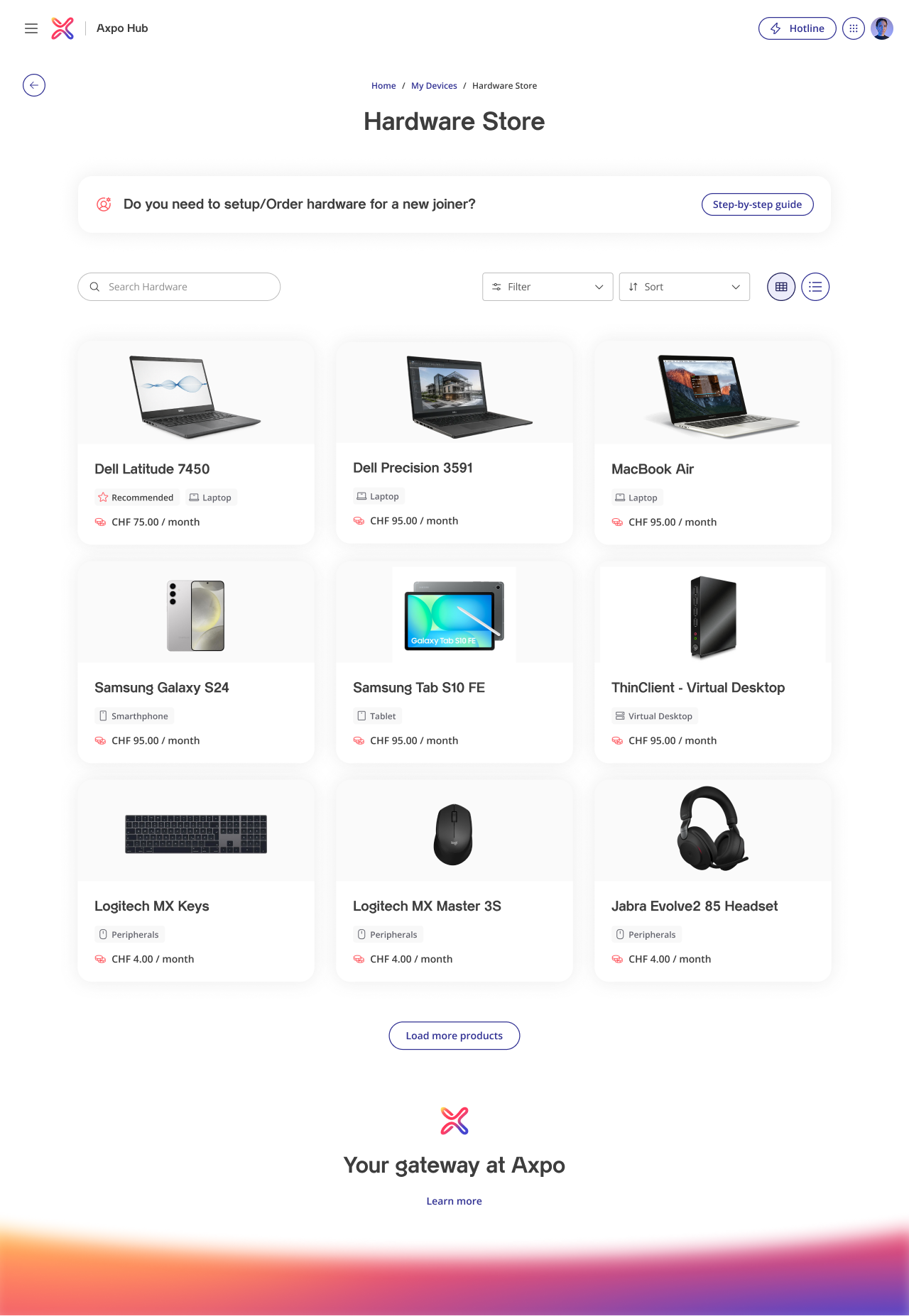
The hardware store in Axpo Hub, for example, depended on data coming from different systems. I worked with engineering to consider APIs, data requirements and how those constraints would shape the experience.
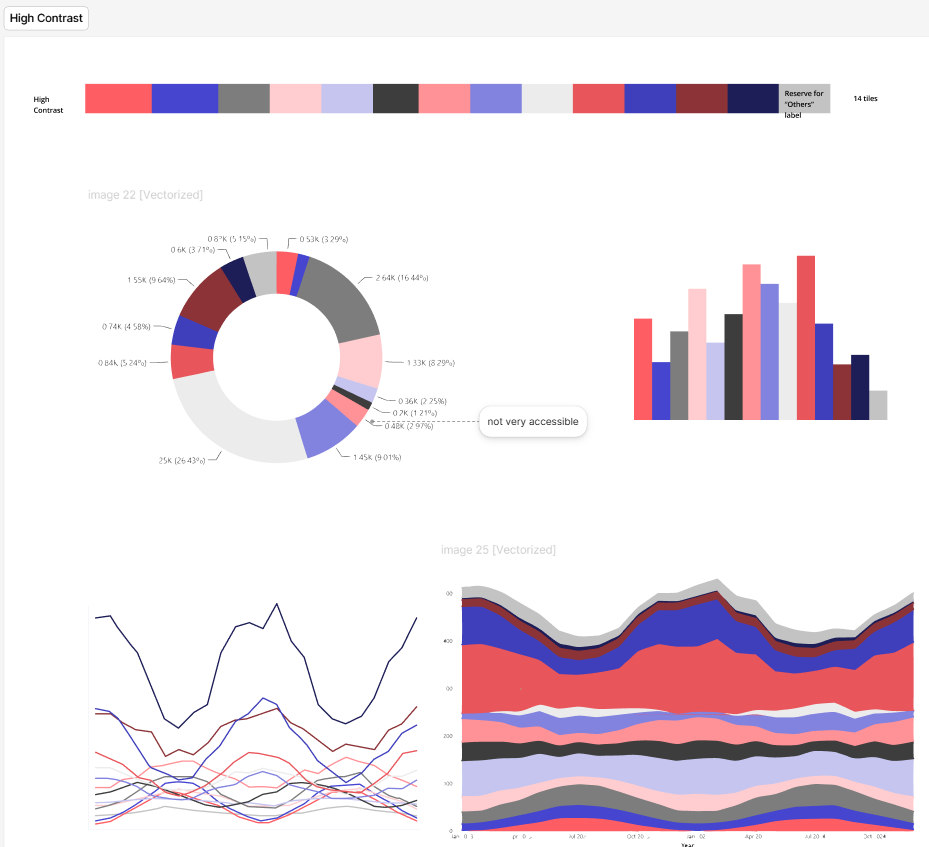
For the Power BI colour system, I first needed to understand how the platform and its reports work before translating the Axpo brand palette into a visualisation system that could remain readable, distinguishable and accessible.
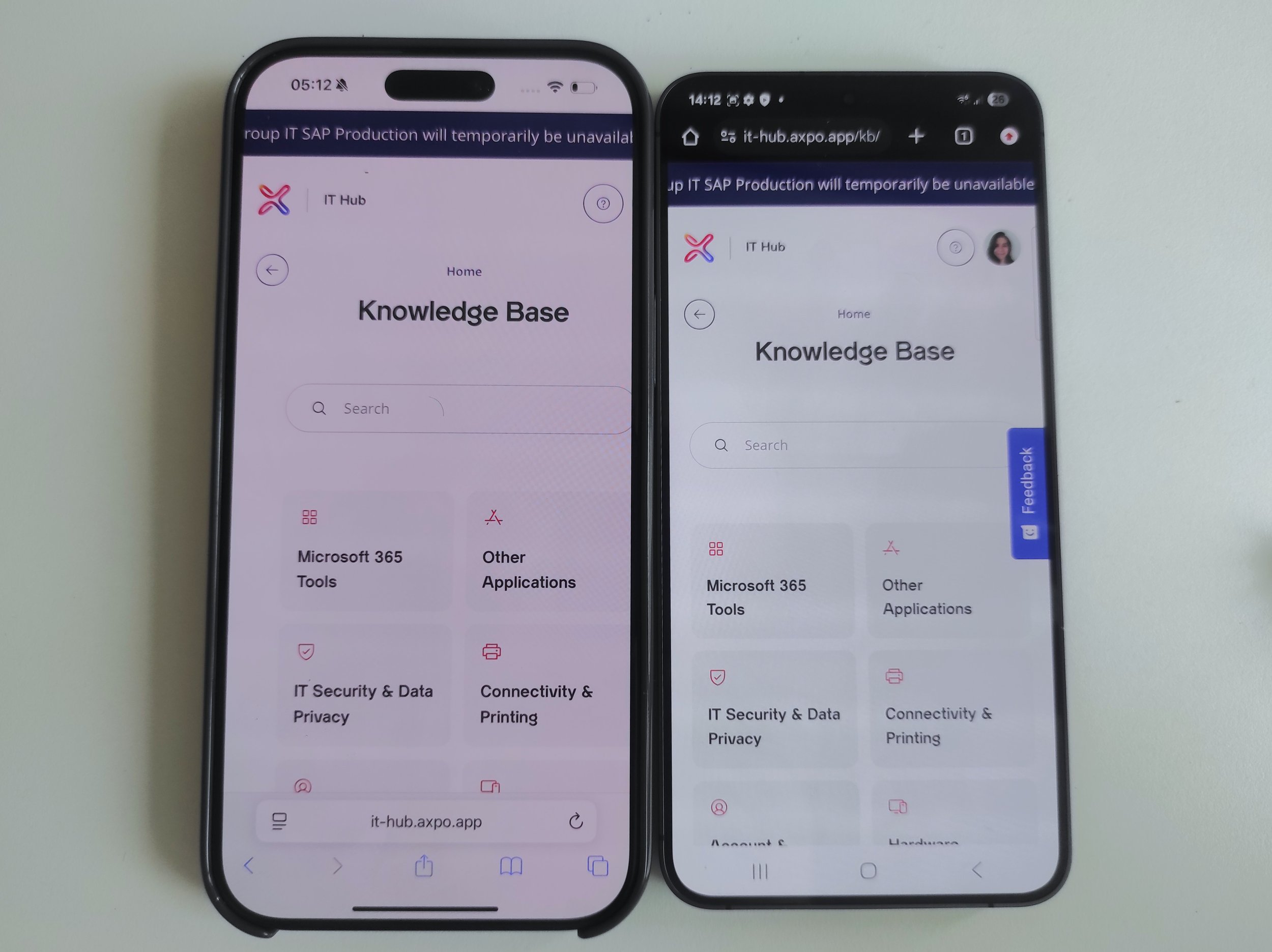
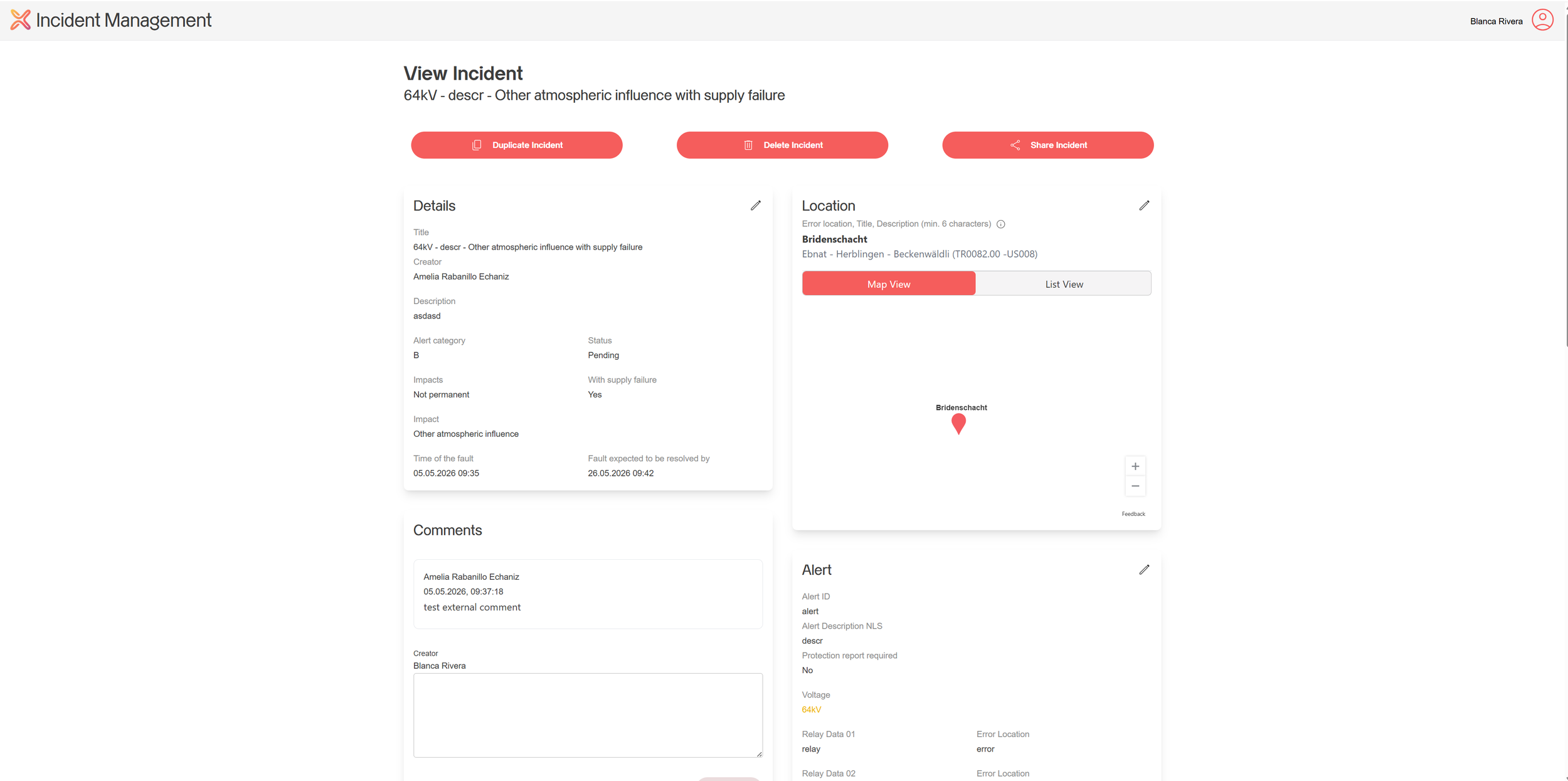
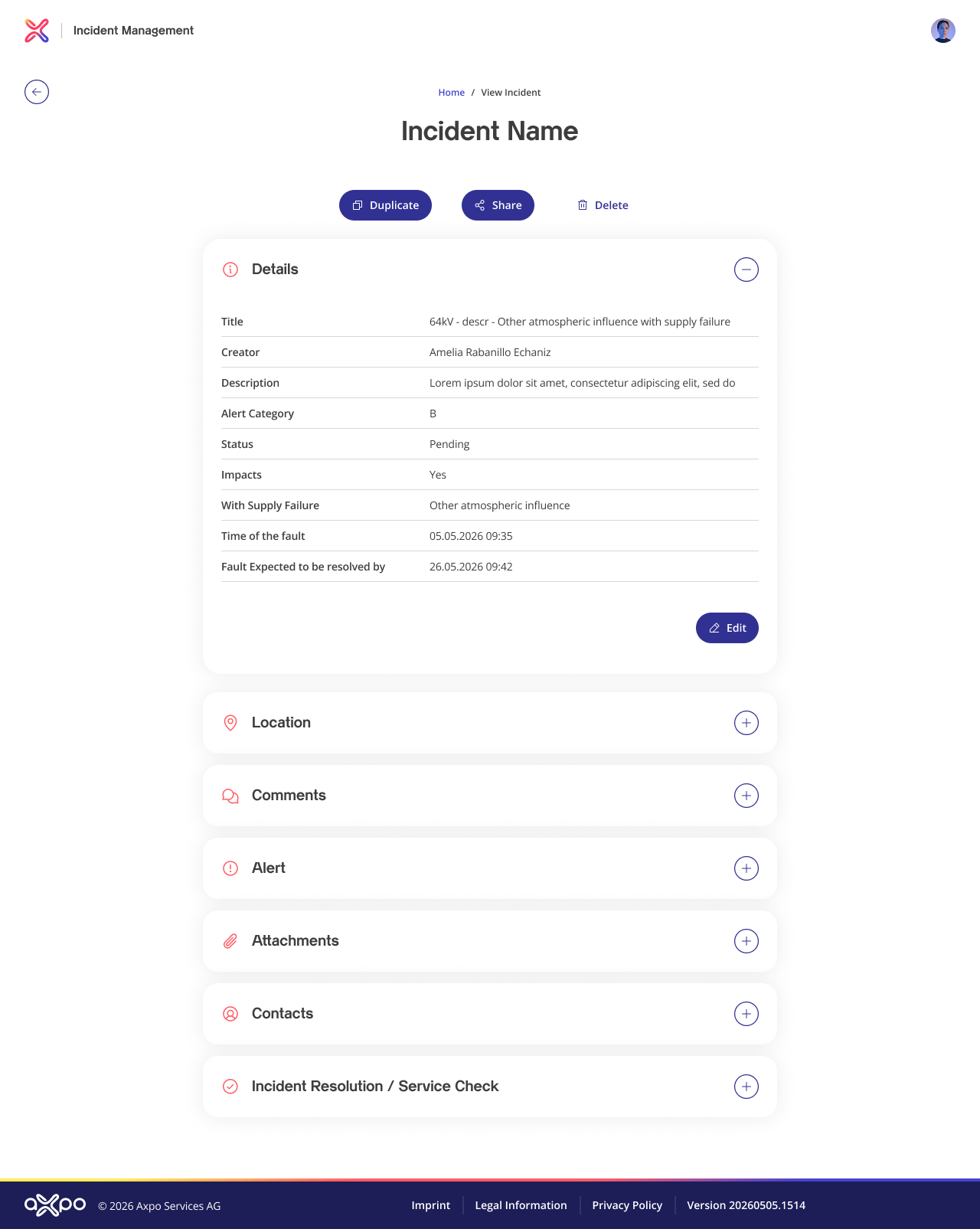
For the responsive audit, I systematically reviewed the product across devices and browsers and translated the findings into actionable Jira tickets that the team could prioritise.
02/ Define the user experience
Once I understand the context, I look for the simplest experience that can solve the problem.
Across different projects, a few principles repeatedly guided my decisions:
Find: Make information and services easier to discover.
Understand: Reduce complexity through hierarchy, content and clear AI interactions.
Act: Make the next step obvious and contextual.
Trust: Provide feedback, consistency, accessibility and predictable behaviour.
Scale: Create patterns, structures and technical foundations that can be reused.
The goal isn't to apply UX principles mechanically. It's to give teams clear recommendations grounded in user needs, behaviour and the context of the product.
04/ Validate decisions
User feedback became one of my main decision-making tools.
Sometimes it confirmed the direction. Sometimes it changed it. Sometimes it showed that the real problem was somewhere else.
I personally planned and conducted user testing; from writing the scripts and preparing prototypes to running the sessions and presenting findings to stakeholders.
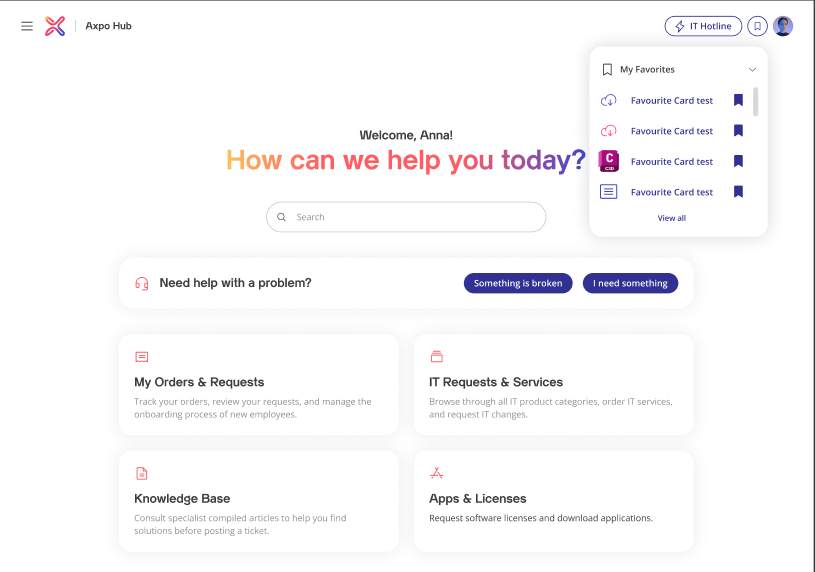
For Favorites, users immediately understood the concept because it matched familiar browser behaviour. Testing also showed that Favorites complemented search rather than replacing it.
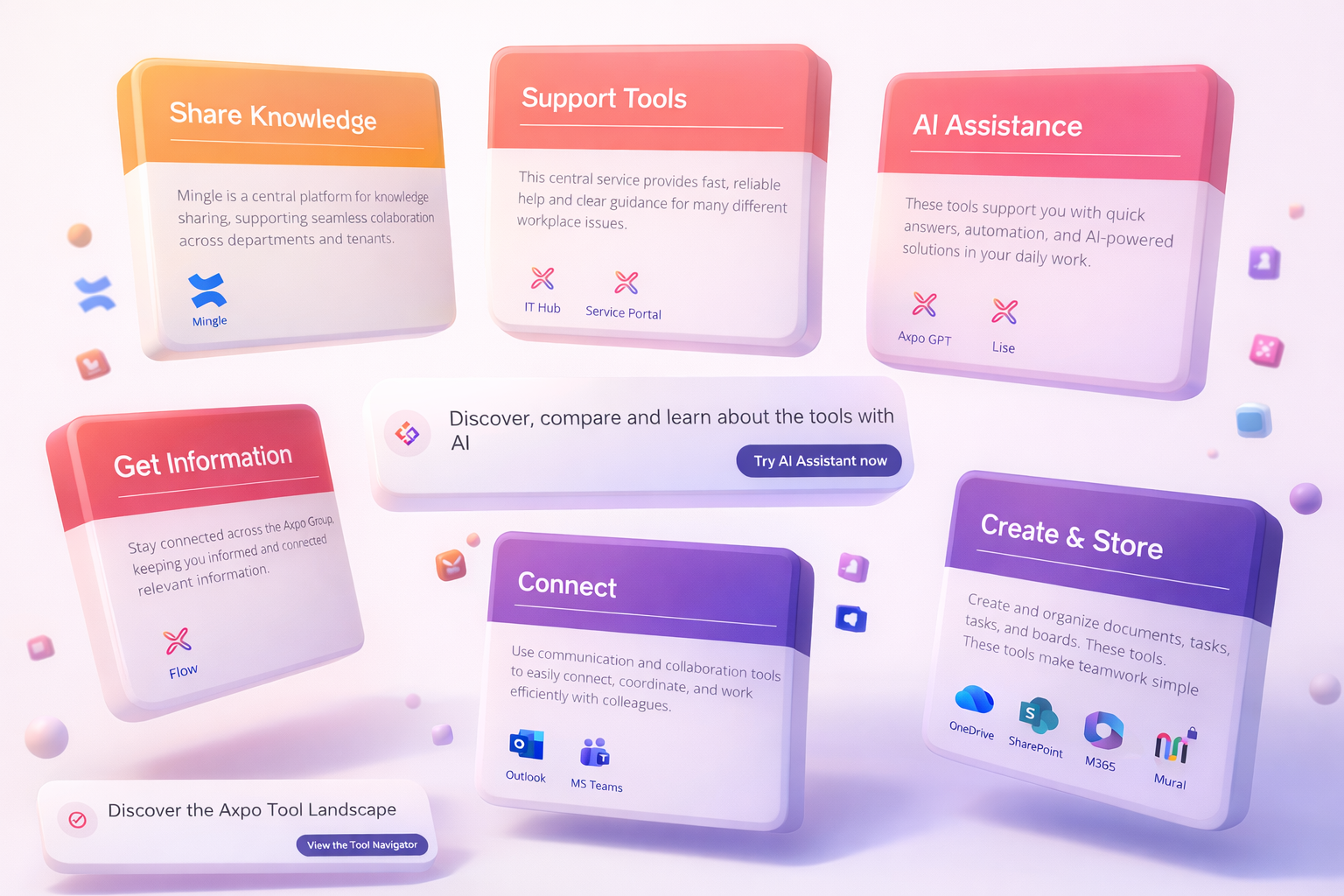
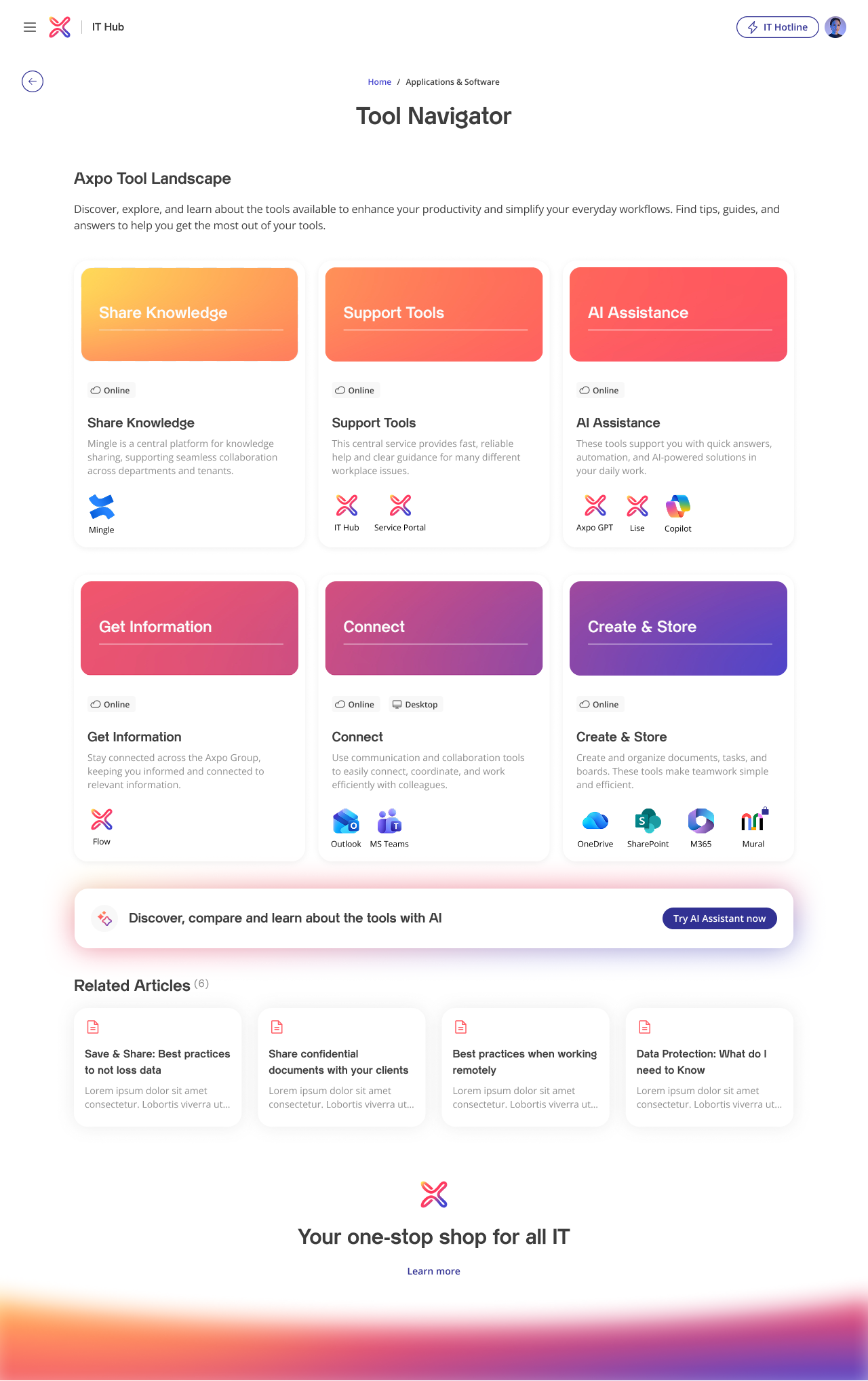
For Tool Navigator, testing showed that the concept was valuable, but terminology and discovery paths needed refinement. AI was particularly useful when users didn't know what terminology to search for.
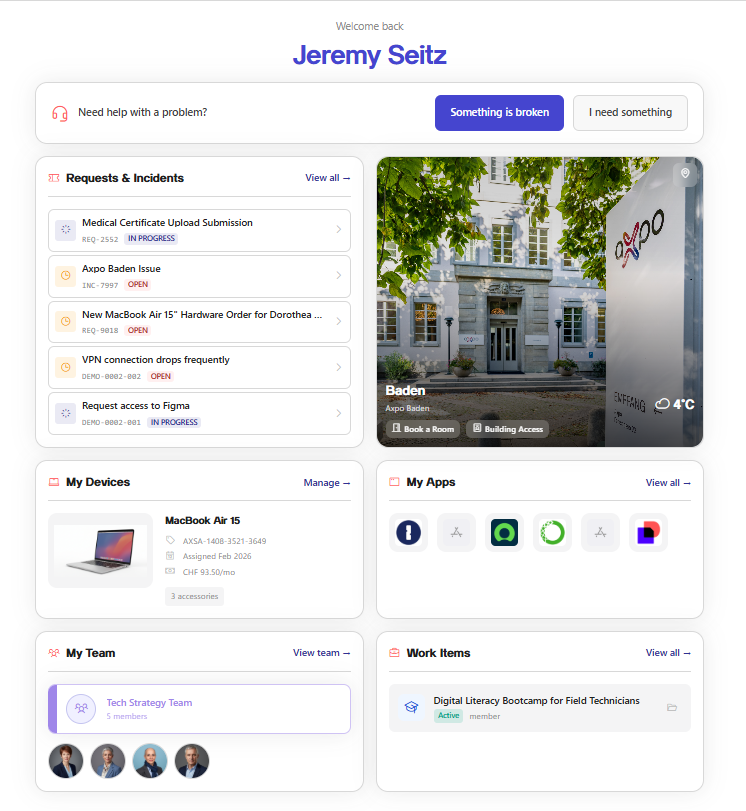
For Axpo Hub, testing with users from different areas uncovered issues around categorisation, location switching and multi-step workflows that weren't obvious from the interface alone. These findings helped inform product and business decisions.
Not every initiative reached production. Some were implemented, some are waiting for prioritisation, and others remained exploratory.
That's part of the process.
The goal of validation isn't to prove the design is right. It's to learn early enough to make a better decision.
05/ Work beyond the screen
The longer I worked at Axpo, the more I saw that UX quality depends on what happens around the interface too.
That led me to several self-initiated explorations.
Measure: I explored UX KPIs and behavioural analytics, and self-trained in tools such as Hotjar and Matomo to understand how behavioural data could support UX decisions and connect user experience with operational outcomes.
Scale: I explored how design-system practices could evolve within an enterprise environment — and more recently, how design systems could become better prepared for AI-assisted workflows and agentic design.
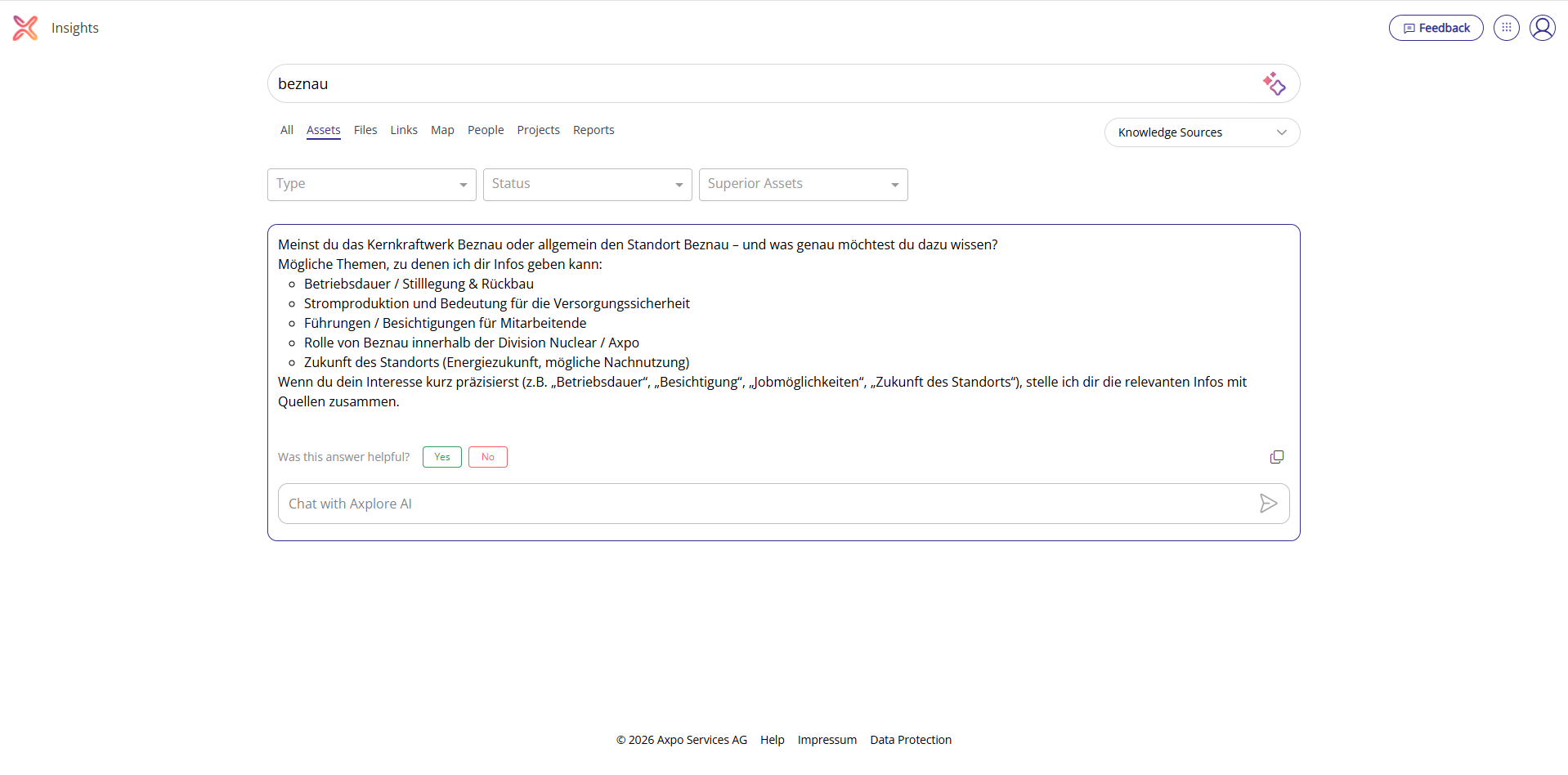
Evolve: I explored how AI could support UX workflows, from design-to-code and AI-assisted critique to prototyping and agentic design.
Connect: I initiated a UX Community of Practice and brought together 16 designers from across Axpo. Meeting monthly to share knowledge and discuss topics such as design systems, AI and UX metrics.
These initiatives all started from the same question:
“Could we do this better?”

Impact
Not every initiative reached production — and that was part of the reality of working in a large organisation. Some work was implemented. Some is waiting for prioritisation. Some was exploratory.
But the outcomes were still tangible.
For products
New experiences, UX improvements and implementation-ready recommendations.
For teams
Research findings that influenced roadmaps and business decisions, while improving communication between design, product and engineering.
For users
Clearer workflows and experiences that stakeholders and users described as making their work easier and pleasant.
For the organisation
New conversations around UX measurement, design systems, AI-assisted design and cross-team collaboration.
Reflection
My biggest learning wasn't a design technique, it was learning how to operate in complexity.
I learned to move between user needs, business goals, technical constraints and organisational realities, and to be comfortable when there isn't an obvious answer.
I also became more confident challenging assumptions. Sometimes that means telling a senior stakeholder that the direction they are considering isn't supported by what users are actually telling us. That's uncomfortable.
But I have learned that good design isn't about agreeing with everyone. It's about bringing useful evidence into the conversation and helping the team make a better decision.
And perhaps the biggest shift was understanding that UX doesn't stop at the interface.
A better experience can come from a better screen, a better content structure, a better design system, better data, better research or simply better collaboration between the people building the product.
That's the kind of designer I want to keep becoming.
More projects