Bringing surgical training outside the operating room.
Surgical technology is evolving rapidly, but opportunities to practise new skills are not equally accessible.
Dedalyx is a surgical training simulator designed to help medical trainees develop motor skills outside the operating room.
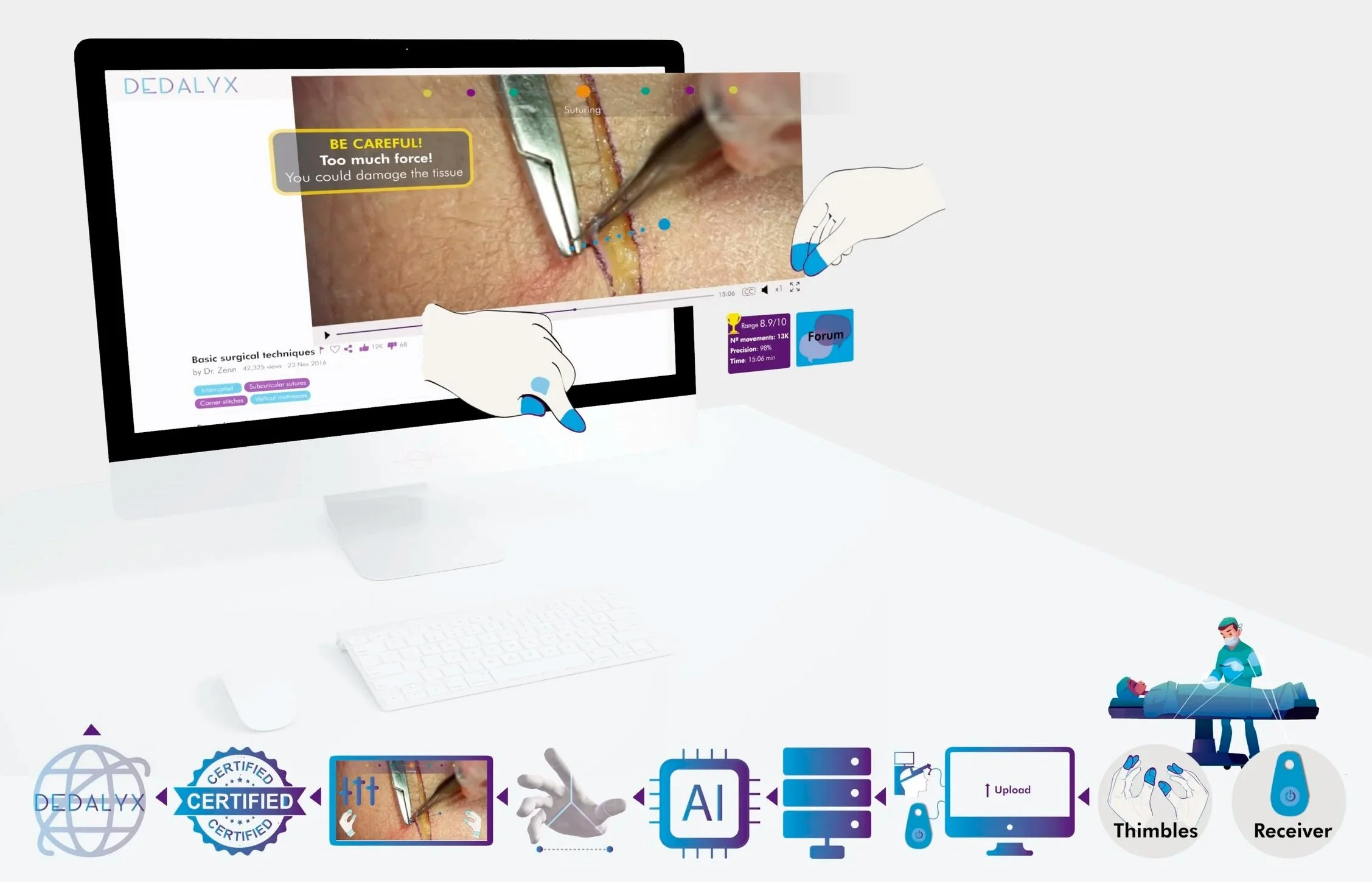
The concept combines wearable motion-tracking thimbles with an online training platform. The thimbles capture finger movements and applied forces, while the platform turns this data into exercises, feedback and opportunities for repeated practice.
As a solo Master's thesis project at the Royal College of Art (RCA) and Imperial College London (ICL), I led the project end-to-end—from research and opportunity definition to product development, interaction design and MVP testing with medical professionals.
Organization: RCA & ICL
Role: Design Researcher & Product developer
Date: 2020
Human-Centered Design Research · UX Design · Service Design · Product development · User testing · Design in Healthcare
The spark
Surgery is changing. How we prepare for it should too.
Like aviation, surgery is a field where human performance and human factors can directly affect people's lives.
New surgical technologies are changing not only what surgeons can do, but also the skills they need to develop.
Much of surgical training still takes place within clinical environments, where opportunities to practise are constrained by access to facilities, expert supervision, time and, ultimately, patient safety.
As new technologies such as the da Vinci surgical robot introduced different ways of interacting with surgical instruments, simulation and patient-specific preparation were creating new possibilities for preparing before entering the operating room.
This led me to a broader question:
How might human-centred design support the development of surgical motor skills outside the operating room?
The challenge
Designing inside a complex healthcare system.
The product problem was challenging enough. But the project also had to be researched and developed inside a highly regulated, specialised environment.
01/ Access to the real context
Gaining access to public healthcare facilities was difficult.
Surgical training happens within environments where time is limited, responsibilities are high and access needs to be carefully coordinated.
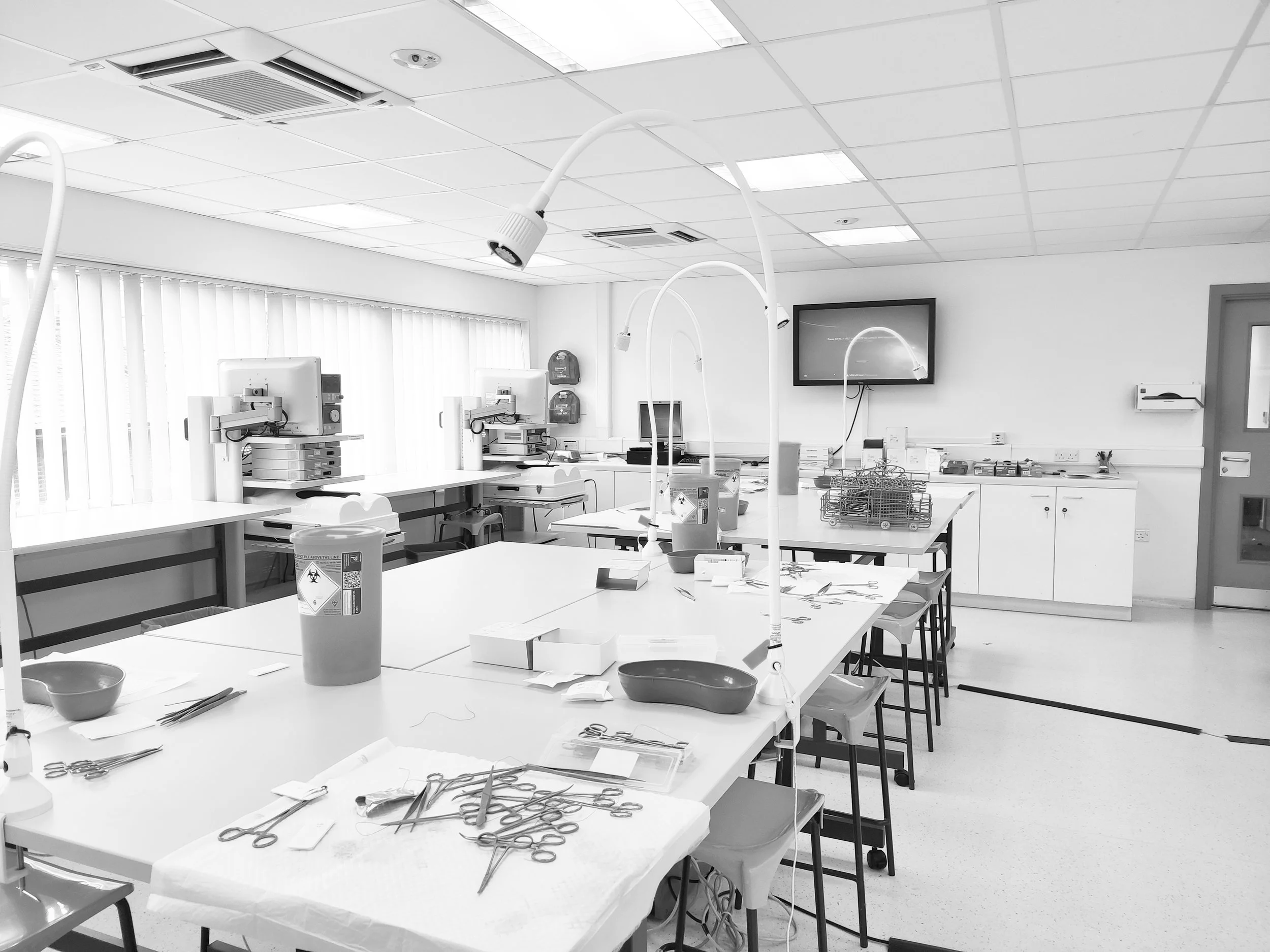
Understanding the context therefore required more than simply recruiting participants for interviews. I needed to get as close as possible to the environments where training actually happened.
02/ Research in a regulated environment
Working with public healthcare institutions also meant navigating ethics approval and the requirements of a highly regulated healthcare environment.
This affected the pace and flexibility of the research and required me to carefully adapt how research activities were planned and conducted.
03/ COVID changed the research plan
The COVID-19 pandemic emerged during the research.
Access to healthcare facilities and face-to-face interactions became significantly more difficult, forcing much of the interaction with participants to move online.
This disrupted ethnographic research and access to physical training environments, requiring me to rethink parts of the design-research toolkit and find new ways to maintain contact with participants..
04/ Different healthcare contexts, different levels of access
I looked beyond a single healthcare context, exploring examples across the UK, Colombia, the Netherlands and Spain.
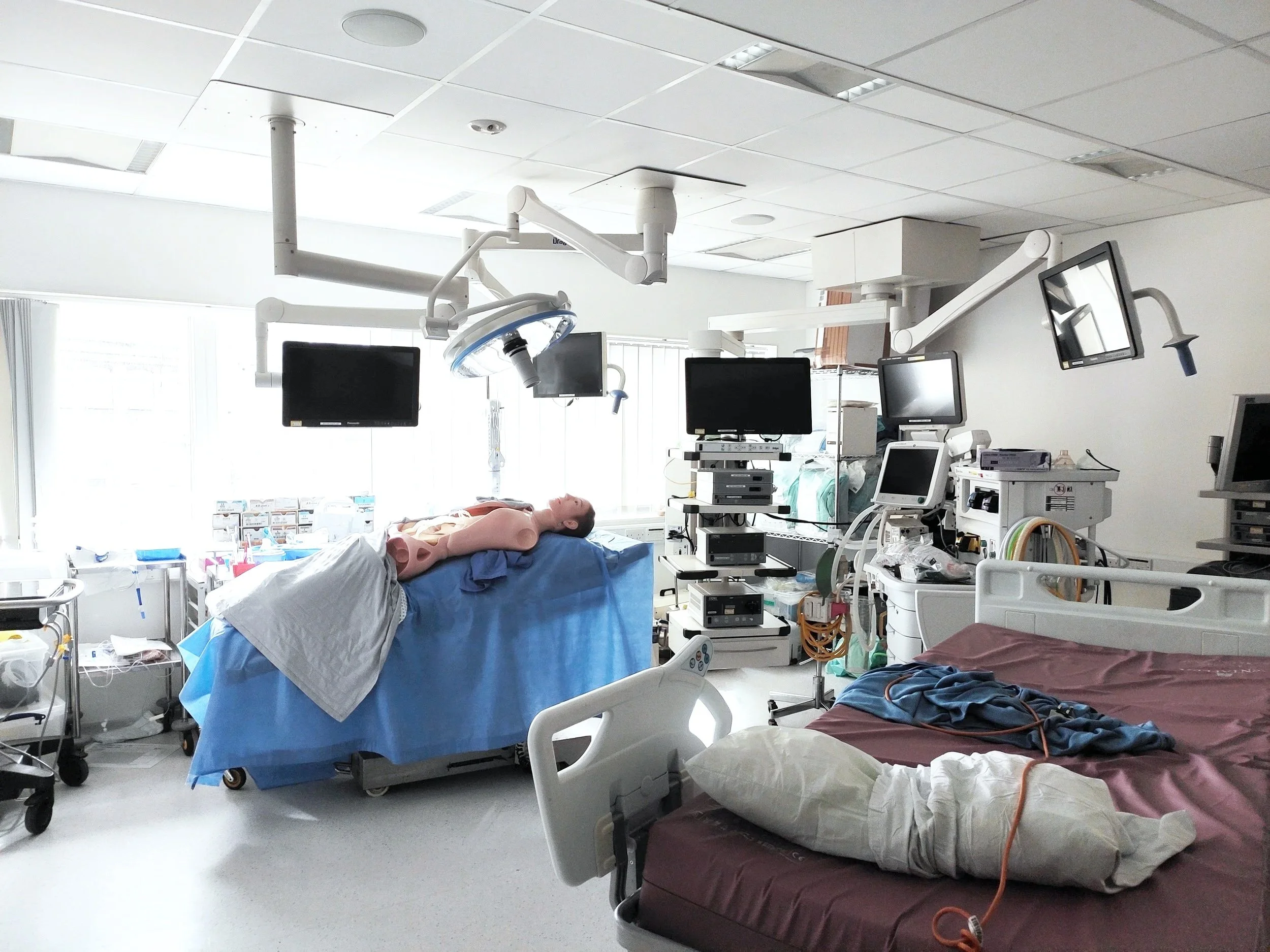
Some institutions had sophisticated surgical training facilities and were actively exploring new technologies. Others had much more limited access to dedicated training infrastructure.
This created a product challenge beyond usability:
How do you design a surgical training experience when access to equipment, facilities and expertise varies?
05/ Designing for an ecosystem, not one user
The project involved people with different relationships to surgical education: surgeons, medical students, educators, nurses, etc. Their perspectives were not interchangeable.
The product therefore needed to make sense within a wider learning ecosystem involving learners, experts, educators and institutions.
My approach
I structured the project around the Double Diamond Design Research Framework: Discover → Define → Ideate → Deliver, using it to move from a complex healthcare context towards a testable product proposition.
01/ Discover — Understanding how surgical skills are learned
I combined literature review, ethnographic research, interviews and participatory design methods to explore three interconnected areas:
Technology: What technologies were already being used in surgical training? What was emerging, and how might new surgical technologies change the skills surgeons needed?
Medical training: How were surgical skills currently taught, practised and evaluated?
Human factors: How do people develop motor skills? What motivates repeated practice? What types of support and feedback help learning?
I interviewed around 15 people across surgery, medical education and nursing, and visited training environments to understand the experience beyond what could be captured through interviews alone.
The most useful outcome wasn't a list of technologies or training methods. It was understanding where the existing training experience became constrained by access, repetition, expert availability and feedback.
This reframed the opportunity to:
What kind of training experience would allow people to confidently develop surgical motor skills before performing them in a clinical environment?
02/ Define — Turning research into product requirements
The research revealed an opportunity to create the conditions for deliberate, repeatable motor-skill practice.
I translated the research into a set of product requirements:
Make failure safe: Create an environment where mistakes are part of learning rather than a risk transferred to the patient.
Enable repetition: Allow motor skills to be practised repeatedly without depending on a live procedure.
Make practice portable: Reduce dependence on dedicated simulation facilities, schedules or mentor availability.
Support the learning curve: Give learners a way to understand how their performance changes over time through different types of feedback.
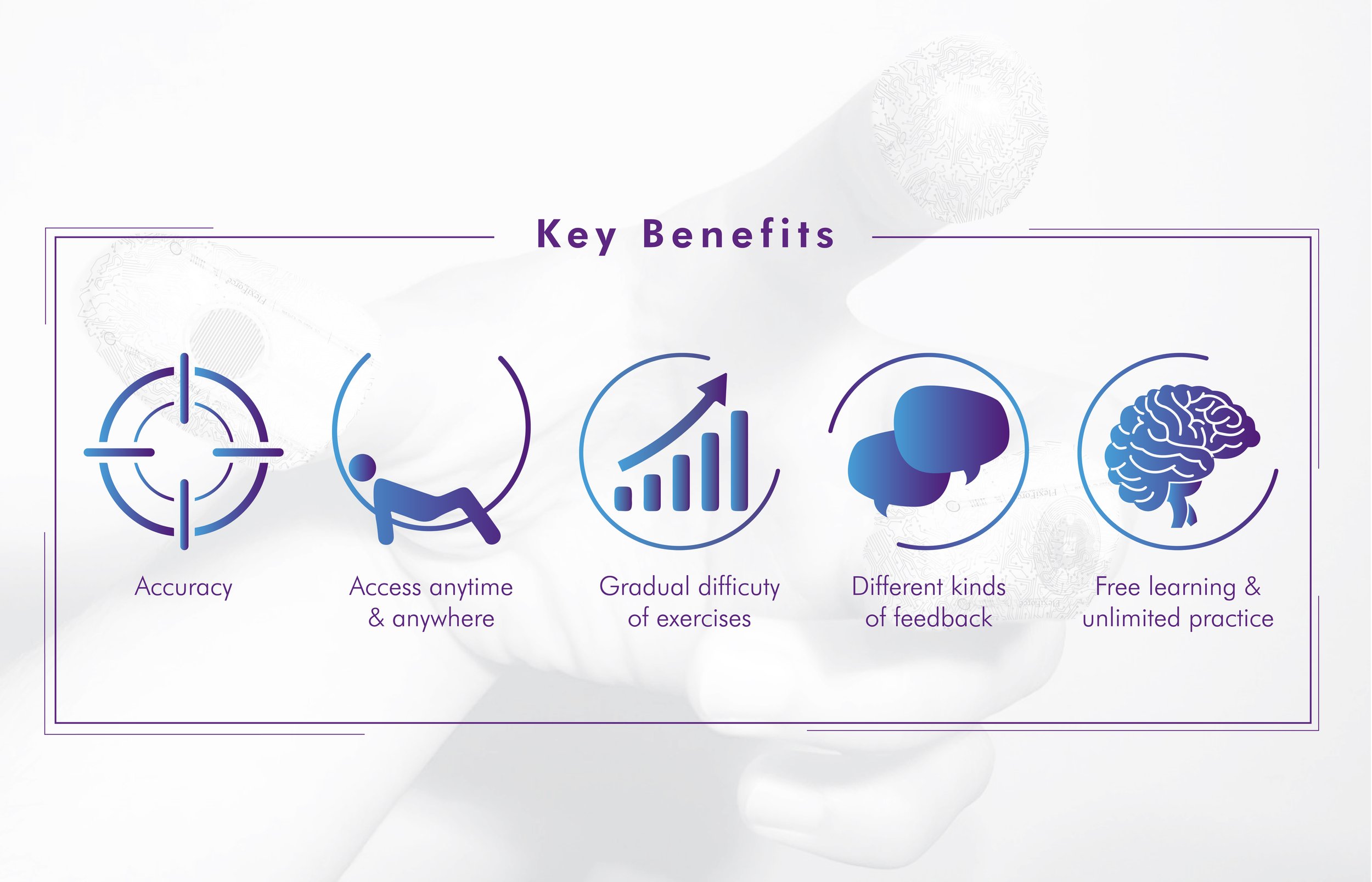
Make practice more accessible: Consider how a training experience could work across contexts with very different levels of infrastructure, equipment and resources.
These requirements led to a clear product direction:
Create a training experience that allows learners to practise surgical motor skills independently, receive meaningful feedback and repeat exercises wherever training is possible.
03/ Ideate — Materialising the findings into a product
The concept combined two layers into one system:
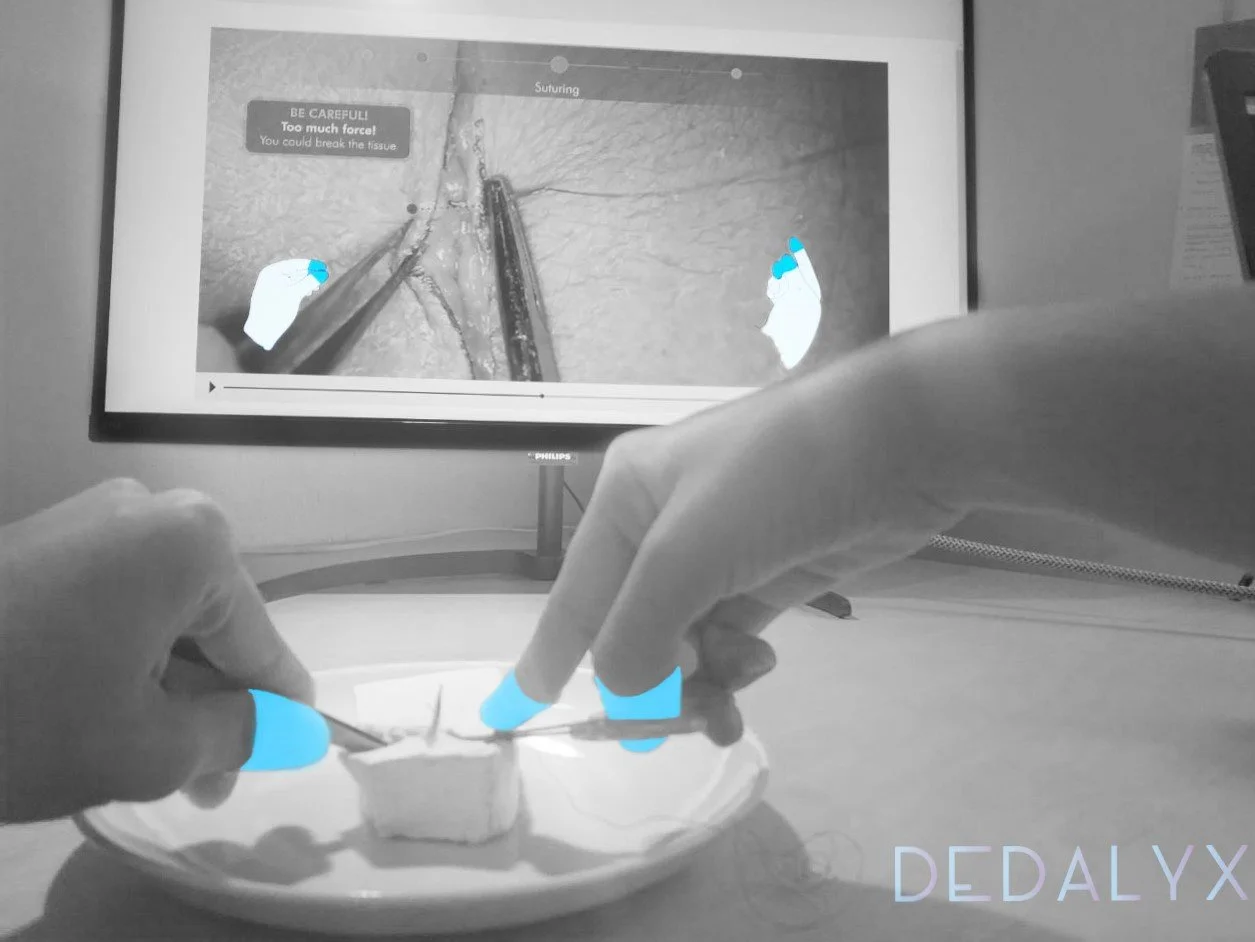
Physical: A wearable motion-tracking thimble captures finger movements and applied forces.
Digital: An online training platform transforms movement data into exercises, feedback and opportunities to monitor progress.
The thimbles could be used to capture the movements of an expert surgeon during a surgical procedure. Worn underneath regular surgical gloves, the device was intended to capture the subtle movements involved in surgical actions without interfering with precision.
Those movements could then become part of a training experience.
A trainee could use the same thimbles to reproduce the expert's movements while receiving feedback through the platform.
This shifted the role of technology from simply simulating a procedure to making expert movement observable and repeatable.
The platform also introduced the possibility of connecting learners with expertise beyond their immediate institution, opening up a broader model of distributed surgical education.
04/ Deliver. Bringing the concept back to medical professionals.
I developed an MVP combining the physical thimbles and digital training platform, then tested the concept with the same broad groups represented during the research.
The goal wasn't to demonstrate clinical efficacy.
It was to understand whether the proposition made sense to people working in surgical education, and whether they could see value in this new way of practising.
The feedback was particularly interesting around expertise, independence and portability:
“Do you put on the thimble and compare yourself directly to an expert surgeon? Simply WOW!”
“It is like having an expert in deferred time!”
“Like the idea. I can imagine a student practising on the bus!”
The responses suggested that participants could quickly understand the value of connecting physical practice, expert knowledge and digital feedback.
Impact
International recognition
Dedalyx generated interest from both the medical and design communities.
The project was:
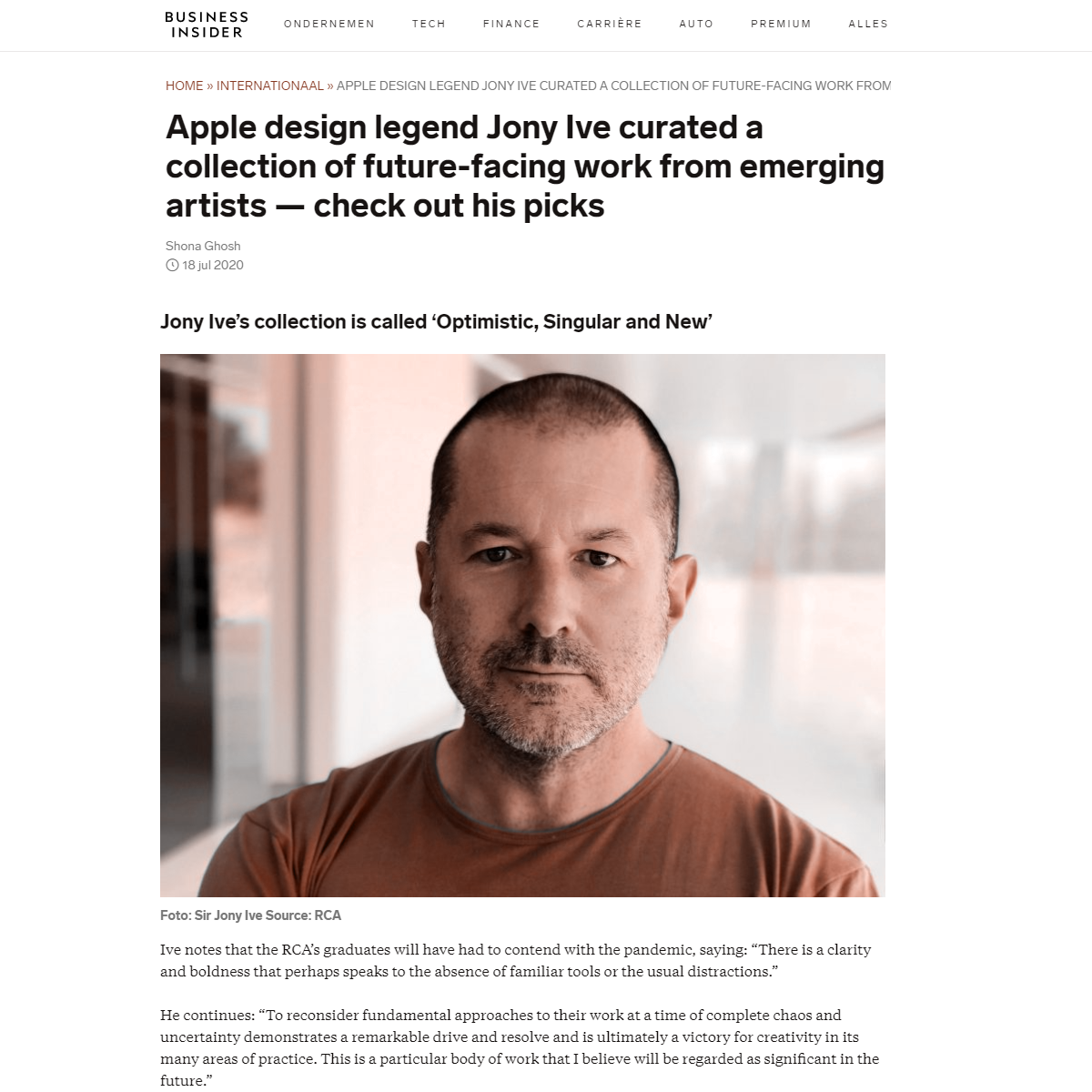
Curated by Sir Jony Ive as part of the RCA 2020 collection.
Awarded by the British Spanish Society in 2020.
Exhibited at the London Design Biennale 2020, Design in an Age of Crisis.
Exhibited at the 9th Iberoamerican Biennale of Design (BID) in Madrid.
These recognitions provided external validation that the project had relevance beyond the academic context.
But the most meaningful outcome for me was what happened next…
From a thesis project to a new collaboration
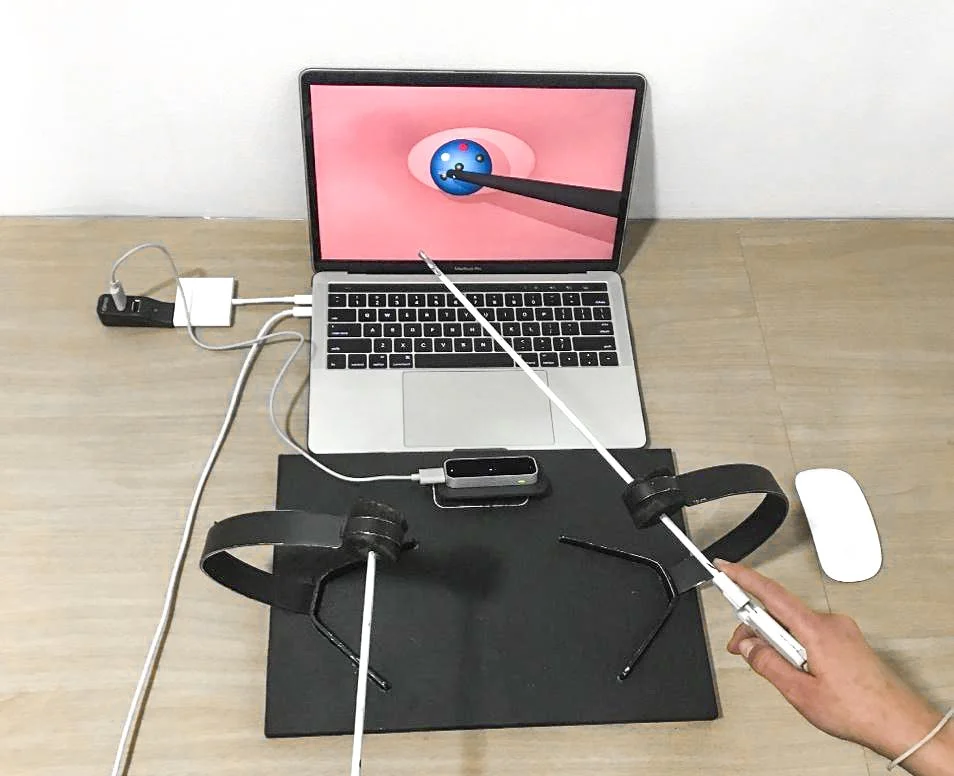
The work led to an invitation to collaborate with a paediatric surgeon in Colombia on SIMISGEST-VR, a project exploring a portable, low-cost VR simulator for learning basic psychomotor skills in Minimally Invasive Surgery (MIS).
The project was subsequently presented at Mobile World Congress Barcelona in 2021.
Reflection
Designing healthcare products is not only about designing the technology. I started the project interested in emerging surgical technologies and the possibilities they could create. I finished it with a stronger understanding that technology only creates value when the surrounding system allows people to adopt, learn and use it.
01/ Adoption is part of the design problem
A technically advanced solution can still fail if people do not have the time, resources, infrastructure or confidence to use it.
This changed the way I approach product design. I now see adoption, onboarding, learning and accessibility as part of the product experience—not problems to solve after the technology has been designed.
02/ Constrains can reveal the opportunity
Access restrictions, regulation, limited facilities and COVID initially looked like obstacles to the research.
But they also exposed the underlying problem Dedalyx was trying to address.
If training depends on being in the right place, at the right time, with the right equipment and an available expert, then access itself becomes part of the experience we need to design.
This shifted my thinking from:
How can we improve the existing training environment?
to:
What could we move outside that environment?
03/ Human factors cannot be designed around
The most important part of a healthcare system is still the people operating within it—and ultimately the people receiving care.
Designing for healthcare therefore requires looking beyond the technology or institutional workflow and considering the wider human system: motivation, confidence, expertise, learning, vulnerability and the relationships between people.
Dedalyx reinforced for me that human factors are not a layer added to a healthcare product. They are part of the product problem itself.
04/ Don’t centralise expertise. Make it accessible
One of the ideas I found most powerful was the possibility of separating expertise from physical presence.
Instead of requiring every learner to access the same facilities or the same expert at the same time, Dedalyx explored how expertise could be captured, shared and revisited.
This became an important design principle for me:
When access to resources is unequal, good product design can help make knowledge more portable.
05/ Design can connect physical and digital systems
Dedalyx also taught me to think beyond individual interfaces.
The experience only worked because the physical interaction, sensing technology, data and digital feedback formed one system.
The thimble wasn't simply a piece of hardware, and the platform wasn't simply a dashboard. Each existed to support the same learning loop.
That systems perspective has stayed with me: the best digital experience sometimes begins with understanding what happens outside the screen.
Dedalyx ultimately shaped the kind of designer I want to be:
Someone who can enter complex domains, understand the people and systems within them, turn ambiguous research into product direction, and design solutions that work within real-world constraints.
It also changed the question I ask when approaching innovation.
Instead of only asking:
“What new technology can we introduce?”
I now ask:
“What needs to change around people for this technology to genuinely create value?”
That question—from technology to adoption, from centralised resources to accessible expertise, and from individual interfaces to connected systems—is what I carried from Dedalyx into the work that followed.
More projects